Rooftop/Ground Mounts
  • How to Calculate the Right Solar Mounting Structure for Your PV Project?
    How to Calculate the Right Solar Mounting Structure for Your PV Project? Oct 12, 2026
    Introduction A solar mounting structure is the backbone of any photovoltaic (PV) project. It supports the solar modules, transfers loads safely to the roof or ground, and ensures the system can operate reliably for 25–30 years. Choosing the right structure is not simply a matter of selecting rails and brackets — it requires careful calculation based on site conditions, module specifications, environmental loads, and engineering standards. An incorrectly designed mounting system can lead to excessive material costs, installation problems, or even structural failure under extreme wind, snow, or seismic events. This guide explains the key steps engineers use to calculate the correct solar mounting structure for a PV project.     1. Understand the Main Loads on a Solar Mounting Structure The first step is identifying all forces acting on the PV mounting system. 1.1 Dead Load (Permanent Load) Dead load is the weight of all fixed components, including: · Solar panels · Aluminum rails · Clamps · Bolts and fasteners · Mounting brackets · Ballast (for some flat-roof systems) The structure must safely support this weight throughout the project lifetime. Basic formula: Dead Load = Module Weight + Mounting System Weight + Additional Equipment Weight Example: A PV module weighs 25 kg and has an area of 2.2 m²: \[ 25kg ÷ 2.2m² = 11.4kg/m² \] Then add the weight of rails, clamps, and other components.     2. Calculate Wind Load Wind load is usually the most critical factor in solar mounting design, especially for rooftop systems, ground mounts, and solar carports. Wind creates pressure and uplift forces that can pull modules and structures away from their foundations.  Basic Wind Pressure Formula \[ P = 0.5 \times \rho \times V^2 \] Where: · P = wind pressure (Pa) · ρ = air density (approximately 1.225 kg/m³) · V = design wind speed (m/s) Example: For a wind speed of 40 m/s: \[ P=0.5 \times 1.225 \times 40^2 \]\[ P≈980Pa \] The actual design load must also consider: · Wind direction · Panel tilt angle · Building height · Terrain category · Array edge effects · Local design codes Wind pressure is often higher at the edges and corners of PV arrays because airflow creates stronger suction forces in these areas.      3. Calculate Snow Load (If Applicable) For projects in cold climates, snow load can become the controlling design factor. Snow load depends on: · Ground snow load · Roof or panel tilt angle · Snow density · Snow drifting conditions Basic formula: \[ Snow\ Load = Ground\ Snow\ Load \times Shape\ Factor \] For example: If the local ground snow load is: 1.5 kN/m² and the panel shape factor is: 0.8 Then: \[ 1.5 \times 0.8 = 1.2kN/m² \] Snow accumulation is usually greater on low-angle PV systems, while steeper modules may shed snow more easily.      4. Determine Solar Module Layout The mounting structure depends heavily on the PV array design. Important parameters include: Module Information · Length · Width · Thickness · Weight · Frame type · Clamp position Array Layout · Number of modules per row · Number of rows · Row spacing · Tilt angle · Orientation (portrait or landscape) Example: A 1 MW ground-mounted project may require thousands of modules. Small changes in rail spacing or pile spacing can significantly affect steel consumption and installation costs.     5. Select the Correct Structural Components After calculating loads, engineers select suitable components. Aluminum Rails Check: · Bending strength · Deflection · Span length · Material grade Longer spans require stronger rails or closer support spacing.     Clamps Clamps must withstand: · Module weight · Wind uplift forces · Thermal expansion · Mechanical stress The clamp position should match the module manufacturer's requirements.     Posts and Foundations For ground-mounted systems: Engineers calculate: · Axial compression · Pull-out force · Bending moment · Soil resistance Foundation selection depends on: · Soil type · Wind speed · Array height · Ground conditions Common foundation types: · Driven piles · Ground screws · Concrete foundations     6. Apply Safety Factors and Design Standards Solar mounting structures must follow local engineering standards. Common standards include: · ASCE 7 (United States) · Eurocode · AS/NZS standards · GB standards (China) The calculation normally includes: · Load combinations · Material safety factors · Connection strength checks · Deflection limits For example, wind, snow, and dead loads are combined according to the applicable structural code rather than simply added together.      7. Example: Simple Ground-Mount Calculation Assume: · Module size: 2.2 m² · Module weight: 25 kg · Wind speed: 40 m/s · Tilt angle: 25° · Snow load: 0.8 kN/m² Step 1: Calculate Dead Load Panel: \[ 25kg ÷ 2.2m²=11.4kg/m² \] Add mounting structure: \[ 11.4+4=15.4kg/m² \]     Step 2: Calculate Wind Pressure \[ P=0.5×1.225×40^2 \]\[ P≈980Pa \] Apply aerodynamic coefficients depending on array position.     Step 3: Select Structure Based on the final loads: · Choose rail size · Determine clamp spacing · Calculate pile depth · Verify bolt strength The final design should pass structural calculations before construction.     8. Common Mistakes When Choosing Solar Mounting Structures Mistake 1: Using a Standard Design Everywhere A structure designed for a low-wind area may fail in a coastal or hurricane region. Solution: Always use project-specific wind and snow data.     Mistake 2: Ignoring Edge Zones The first and last rows experience higher wind forces. Solution: Reinforce edge areas or adjust spacing.     Mistake 3: Oversizing the Structure Too much steel increases project cost. Solution: Optimize: · Rail spacing · Material thickness · Foundation design     Mistake 4: Choosing Based Only on Price A cheaper mounting system may use: · Thinner aluminum ·
  • What Should You Ask a Solar Mounting System Manufacturer Before Ordering?
    What Should You Ask a Solar Mounting System Manufacturer Before Ordering? Oct 12, 2026
    Introduction Choosing the right solar mounting system manufacturer is one of the most important decisions for any PV project. The mounting structure may represent only a portion of the total solar investment, but it plays a critical role in supporting modules safely for 25–30 years. A reliable solar mounting supplier should provide more than just products. They should offer engineering support, quality materials, certifications, technical documentation, and solutions that match your project conditions. Before placing an order, asking the right questions can help you avoid costly installation issues, delays, and structural risks. This guide covers the key questions every EPC contractor, solar installer, distributor, and project developer should ask a solar mounting system manufacturer.         1. What Type of Solar Mounting Systems Do You Manufacture? The first step is confirming whether the manufacturer has experience with your specific project type. Ask: · Do you manufacture rooftop mounting systems? · Do you provide ground-mounted solar structures? · Do you produce solar carport mounting systems? · Do you offer agricultural PV mounting solutions? · Do you support commercial and utility-scale projects? Different applications require different designs. For example:   Rooftop Systems Require: · Lightweight structures · Roof compatibility · Waterproofing considerations · Wind uplift calculations Ground Mount Systems Require: · Foundation design · Soil analysis · Higher structural strength Solar Carports Require: · Vehicle clearance · Waterproof canopy design · Integration with EV charging systems A manufacturer with experience in your application can reduce design risks.   2. What Materials Do You Use for Your Solar Mounting Structures? Material quality directly affects system lifespan. Ask the manufacturer: · What grade of aluminum do you use? · What type of steel is used? · What is the corrosion protection method? · How thick is the material? · What is the expected service life? Common materials include: Aluminum Alloy Advantages: · Lightweight · Corrosion resistant · Easy installation Common grades: · AL6005-T5 · AL6063-T5 Carbon Steel Advantages: · High strength · Suitable for large projects Common protection: · Hot-dip galvanization · Zinc coating For harsh environments such as coastal areas, corrosion resistance is especially important.   3. Can You Provide Structural Calculations? A professional solar mounting manufacturer should provide engineering support. Ask: · Do you provide structural calculations? · Who performs the engineering design? · Are calculations based on local standards? · Can you customize designs for specific wind and snow conditions? Important calculation factors include: · Wind speed · Snow load · Seismic requirements · Module dimensions · Installation height · Foundation conditions A standard design may not be suitable for every project location.     4. What Certifications and Test Reports Do You Have? Certifications demonstrate product reliability and manufacturing quality. Ask for: · Material test reports · Structural calculation reports · Factory quality certificates · Product test reports · Compliance documents Depending on your market, common standards may include: · ASCE 7 (USA) · Eurocode · AS/NZS standards · ISO quality management standards For international projects, documentation is essential for approvals and inspections.     5. What Solar Panels Are Compatible With Your Mounting System? Not every mounting system fits every module. Ask: · Which module sizes are supported? · Are the clamps compatible with my panel frame? · Can you support thin-film or bifacial modules? · Are your components compatible with different module manufacturers? Important module factors: · Frame thickness · Clamp area · Module length and width · Installation orientation <span s
  • How to Choose the Right Solar Mounting System for Your Project?
    How to Choose the Right Solar Mounting System for Your Project? Oct 12, 2026
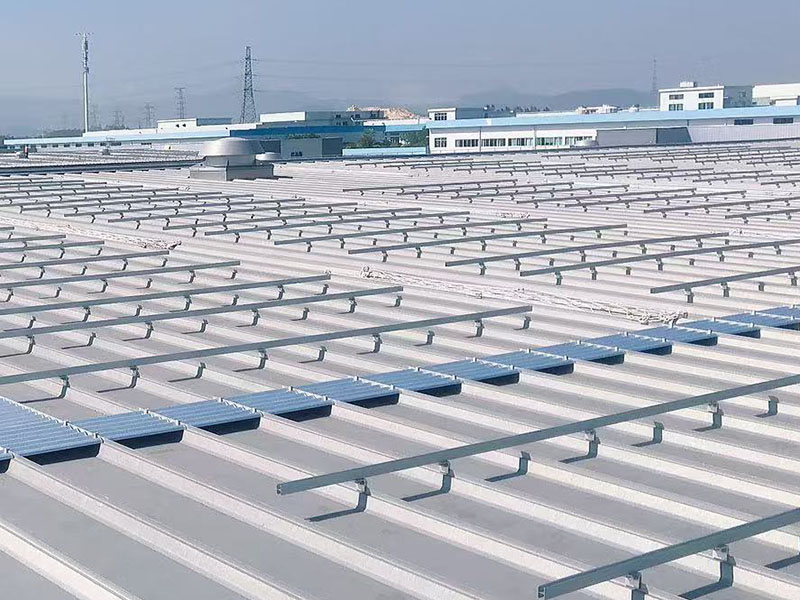
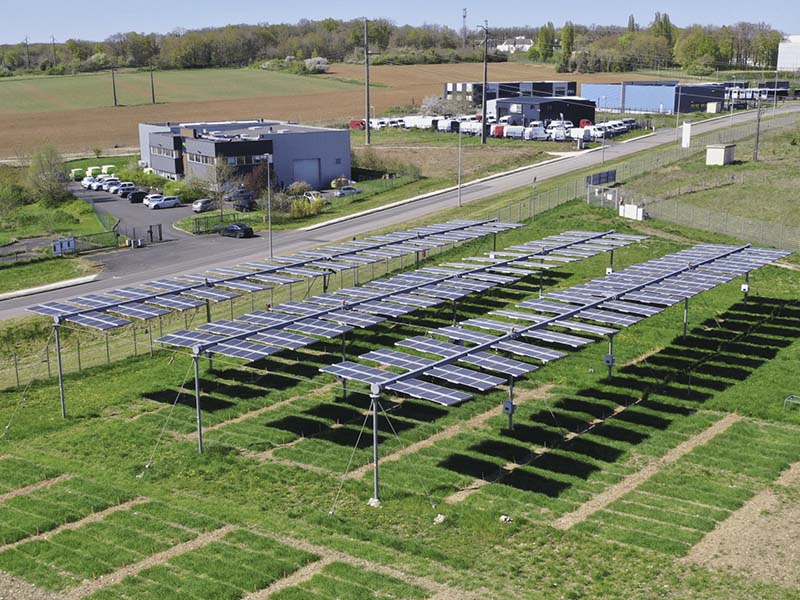
    Most solar project owners focus heavily on panel efficiency, inverter quality, and system sizing when planning a PV installation. Yet the solar mounting system — the structural backbone that holds every module in place — often ends up as an afterthought. In reality, your mounting solution dictates your project’s power output, structural safety, maintenance costs, and 25+ year service life. There is no universal “best” solar mounting system. The right choice always depends on your site conditions, local climate, project type, budget, and long-term operational goals. Whether you’re working on a residential rooftop, commercial building, or utility-scale ground plant, this step-by-step guide will help you select the most suitable solar mounting system for your project. 1. Start With Your Installation Site & Structure Type The first rule of solar mounting selection: match your brackets to your installation environment. Different sites require completely different structural designs and foundation solutions. Rooftop Solar Projects Rooftop installations prioritize space-saving and non-destructive installation. Pitched tile roofs usually adopt roof hook systems that avoid drilling damage and prevent leakage. Flat concrete roofs commonly use ballasted or non-penetrating rail mounts to protect roof waterproofing layers. Metal standing-seam roofs rely on specialized clamps that grip the roof profile without perforation. Before finalizing any design, always confirm the building’s load-bearing capacity. Older buildings or lightweight roofs may require structural reinforcement to meet safety standards. Ground-Mounted Solar Projects Ground systems offer flexible layout and easier maintenance. For flat soft soil sites, driven pile foundations deliver fast installation and stable performance. For rocky, hard soil, or mountainous terrain, ground screws or concrete footings are more reliable. Sloped land requires customized adaptive brackets to keep the module array flat and evenly positioned. Special Scenarios For carport solar, agrivoltaic farms, and floating solar projects, you need dedicated mounting structures optimized for shading compatibility, crop growth space, or water environment corrosion resistance.       2. Align With Local Climate & Environmental Loads Weather conditions are one of the most decisive engineering factors for mounting systems. A solution that works for inland plain areas may fail in typhoon-prone coasts or heavy-snow northern regions. High-corrosion areas: Coastal salt spray, industrial pollution, and high humidity demand high-grade corrosion-resistant materials to prevent rust and structural aging. Always ask suppliers for professional wind and snow load calculation reports to ensure full compliance with local building codes. 3. Pick the Right Material for Durability & Lifespan Mounting material directly determines your system's lifespan, stability,and maintenance frequency. The three mainstream materials each have clear application scenarios. Anodized Aluminum Alloy: Lightweight, anti-oxidation, andzero-maintenance. Ideal for most residential and commercialrooftop projects. It balances performance and cost with a cleanappearance. Hot-Dip Galvanized Steel: High structural strength and superiorload capacity. Best for large ground power stations and harshweather environments where stronger support is required. Stainless Steel Accessories: Extremely corrosion-resistant,mainly used for bolts and connection parts in coastal and high-pollution areas to avoid loose connections caused by rust. Never compromise on material quality for lower upfront costs. Inferior materials lead to rust, deformation, and safety hazards within several years, greatly shortening your PV system’s service life.       -- 4. Choose a Tilt & Tracking Mode Based on Yield Goals Your mounting system's angle adjustment mode directly affects solarirradiance absorption and annual power generation output. You canchoose according to your project's yield expectations and budget. Fixed-Tilt Mounts: The most cost-effective and stable option.Pre-set the optimal local installation angle to capture maximumannual sunlight. Perfect for budget-sensitive residential and smallcommercial projects. Seasonal Adjustable Mounts: Allow manual angle adjustmentin different seasons to adapt to solar altitude changes, boostingpower generation by 5%-10% with limited extra cost. Solar Tracking Mounts: Automatically follow the sun'strajectory. Single-axis trackers significantly improve sunlightutilization, while dual-axis trackers achieve the highest poweryield. Suitable for large ground power stations pursuing maximumlong-term.   5. Evaluate Total Cost Instead of One-Time Price Many project owners make a common mistake: choosing thecheapest mounting solution upfront. In fact, solar mounting costevaluation should focus onTotal Cost of Ownership (TCO), not initial investment. High-quality standardized mounting systems feature modular design,precise sizing, and easy installation, which greatly save labor costsand construction time. Their excellent durability eliminates frequentmaintenance, repair, and replacement expenses over 25-30 years. Low-cost inferior brackets may cut initial spending but bring hidden risks: structural aging, power generation loss, repeated maintenance,and even safety accidents. In the long run, qualified mounting solutions always deliver better economic benefits.     Final Conclusion Choosing the right solar mounting system is not a simple purchasing decision — it is a core engineering choice that determines your PV project’s full-cycle performance and return. The ideal solution should perfectly match your site conditions, adapt to local climate loads, adopt durable materials, fit your power generation goals, and comply with regional standards.          
  • What Is a Solar Carport Charger?
    What Is a Solar Carport Charger? Oct 10, 2026
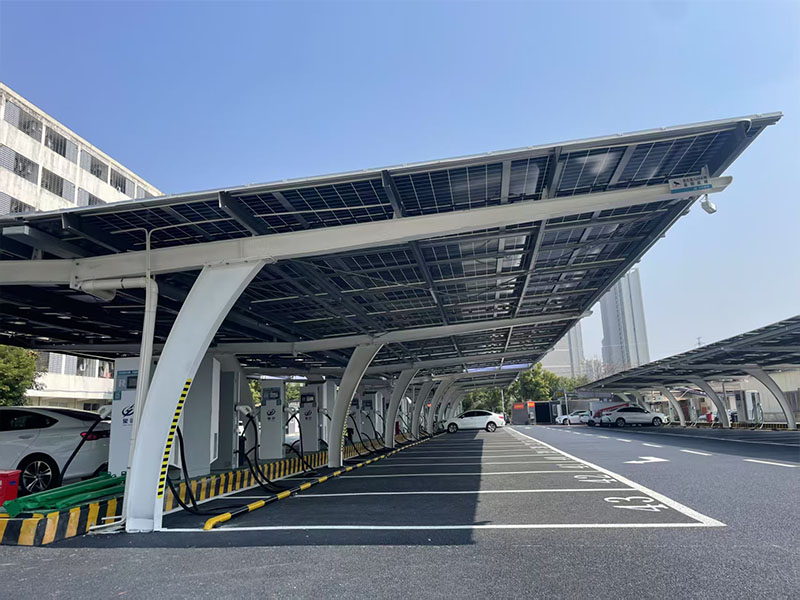
     What Is a Solar Carport Charger? 1. A solar carport charger is an integrated structure that combines: Solar photovoltaic panels Carport mounting structures EV charging stations Inverters Energy management systems Electrical protection equipment The solar panels installed on the carport roof convert sunlight into electricity. This electricity can then be used to: Charge electric vehicles directly Supply power to buildings Feed excess energy back into the grid Store energy in batteries for later use Simply put: Solar Energy + Parking Space + EV Charging = Solar Carport Charger 2. How Does a Solar Carport Charger Work? The working process is simple: Step 1: Solar Energy Generation Solar panels capture sunlight and generate DC electricity. ↓ Step 2: Energy Conversion A solar inverter converts DC electricity into AC electricity suitable for vehicles and buildings. ↓ Step 3: EV Charging The charging station delivers electricity to electric vehicles. ↓ Step 4: Energy Management A smart energy system controls: Charging speed Energy distribution Grid interaction Battery storage This creates an efficient renewable energy ecosystem. 3. Main Components of a Solar Carport Charging System 3.1 Solar Panels Solar modules are the primary energy source. Key factors: Panel efficiency Power rating Weather resistance Warranty period Modern solar carports often use: Monocrystalline solar panels Bifacial solar modules High-efficiency PV modules 3.2 Solar Carport Mounting Structure The mounting structure supports the PV panels and protects vehicles underneath. Common materials: Aluminum Structure Advantages: Lightweight Corrosion resistant Easy installation Galvanized Steel Structure Advantages: High strength Suitable for large commercial projects Strong wind resistance The structure must be designed according to: Wind load Snow load Seismic conditions Vehicle clearance requirements 3.3 EV Charging Stations The charger connects solar energy with electric vehicles. Types include: AC Chargers Suitable for: Homes Offices Long parking periods DC Fast Chargers Suitable for: Shopping centers Highway service areas Public charging stations 3.4 Energy Storage System (Optional) Adding batteries allows solar energy to be stored. Benefits: Charge vehicles at night Reduce grid dependence Improve energy management Provide backup power 4. Benefits of Solar Carport Chargers 4.1 Reduce Electricity Costs Solar carports generate free electricity from sunlight. Businesses can reduce: EV charging costs Peak electricity demand Long-term energy expenses For commercial parking areas, this can create significant savings over the system lifetime. 4.2 Maximize Parking Space Value Parking areas are often unused during the day. A solar carport provides: Vehicle protection Renewable energy generation EV charging services It turns ordinary parking spaces into productive energy assets. 4.3 Protect Vehicles from Weather Solar carports provide shelter from: Strong sunlight Rain Snow Hail Drivers benefit from a more comfortable parking experience. 4.4 Reduce Carbon Emissions Solar-powered EV charging reduces dependence on fossil fuel-based electricity. A solar carport helps organizations achieve: Carbon reduction goals Sustainability targets Green building objectives 4.5 Support Energy Independence With solar generation and battery storage, users can reduce reliance on the electrical grid. This is especially valuable for: Commercial facilities Industrial parks Remote locations 5. Where Are Solar Carport Chargers Used? Commercial Parking Areas Examples: Shopping malls Office buildings Hotels Restaurants Benefits: Attract EV customers Provide charging services Reduce operating costs Corporate Campuses Companies install solar carports to: Support employee EV charging Improve sustainability performance Reduce energy expenses Public Charging Stations Cities and governments use solar carports for: Public EV infrastructure Renewable transportation networks Residential Applications Homeowners can install smaller solar carport systems to: Charge personal EVs Generate household electricity Protect vehicles 6. Important Design Considerations for Solar Carport Chargers A successful solar carport project requires careful planning. 6.1 Structural Design The carport structure must consider: Wind speed Snow load Parking layout Vehicle height Foundation type Engineering calculations ensure safety and durability. 6.2 Solar Panel Orientation and Tilt Angle The correct tilt angle improves energy production. Factors include: Geographic location Sun exposure Shading conditions 6.3 Charging Capacity The system should match EV demand. Consider: Number of charging stations Vehicle charging time Daily energy consumption Future expansion 6.4 Grid Connection Engineers must evaluate: Available electrical capacity Grid connection requirements Energy management strategy 7. Solar Carport Charger vs Traditional EV Charging Station Feature Solar Carport Charger Traditional EV Charger Renewable energy generation Yes No Parking protection Yes No Electricity cost reduction High Limited Carbon reduction High Depends on grid power Space utilization Excellent Limited Solar carports provide both energy generation and charging infrastructure, making them a more sustainable solution. 8. Challenges of Solar Carport Chargers Although solar carports offer many advantages, several factors must be considered: Higher Initial Investment Costs include: Solar panels Mounting structures Chargers Electrical equipment Installation However, long-term energy savings can improve the return on investment. Weather and Structural Requirements The system must withstand: Strong winds Heavy snow Extreme weather conditions Professional engineering is essential. Energy Management Complexity Large systems may require: Smart charging control Battery management Grid interaction systems 9. Future Trends of Solar Carport Charging The solar carport industry is evolving quickly. Future developments include: Smart Charging AI-based systems will optimize: Charging schedules Energy usage Electricity costs Vehicle-to-Grid (V2G) Future EVs may return electricity back to buildings or the grid. Integrated Energy Systems Solar carports will combine: PV generation EV charging Battery storage Smart energy management creating complete renewable energy hubs. Conclusion Solar carport chargers represent the combination of renewable energy and electric mobility. They allow parking areas to become clean energy generation spaces while providing convenient EV charging solutions. For businesses, governments, and homeowners, solar carports offer a powerful way to: ✔ Reduce electricity costs✔ Support EV adoption✔ Generate renewable energy✔ Improve sustainability✔ Maximize land use As electric vehicles become more common, solar carport charging systems will play an increasingly important role in building a cleaner and smarter energy future.         -    
  • Ground Mount vs. Rooftop Solar Mounting System: Which One Is Better?
    Ground Mount vs. Rooftop Solar Mounting System: Which One Is Better? Oct 10, 2026
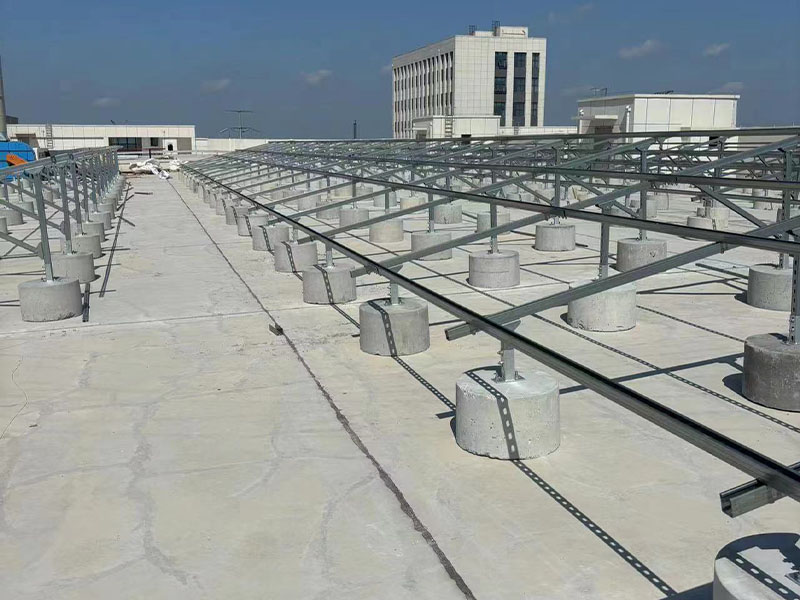
    Ground Mount vs. Rooftop Solar Mounting System: Which One Is Better? When planning a solar PV project, one of the most fundamental decisions you’ll face is choosing between a ground-mounted and a rooftop-mounted solar system. Both solutions deliver clean solar power, but they differ drastically in installation cost, energy performance, design flexibility, maintenance difficulty, and long-term ROI. There is no universal “better” option. The ideal choice depends entirely on your available space, building conditions, energy demand, budget, and future expansion plans. In this blog, we’ll conduct a comprehensive head-to-head comparison to help you figure out which solar mounting system fits your project best. 1. Basic Definition & Core Features Rooftop Solar Mounting System Rooftop solar systems install PV modules directly on residential, commercial, or industrial building roofs. They utilize idle roof space without occupying ground land, making them the most popular solution for urban and densely populated areas. Common types include non-penetrating ballasted mounts, roof hook mounts, and specialized clamp mounts for metal roofs. Ground Solar Mounting System Ground-mounted solar systems are independent structures installed on open land, fields, wastelands, or hillsides. Supported by pile or concrete foundations, these standalone brackets can freely adjust tilt angles and orientations. They are widely used for large utility-scale power stations, rural residential projects, and commercial solar farms, and support fixed, adjustable, and sun-tracking designs. 2. Head-to-Head Comparison: Pros & Cons Rooftop Mount: Pros Zero land occupation: Fully utilizes unused roof space, requiring no extra yard or land area — perfect for urban homes and downtown commercial buildings with limited ground space. Lower upfront cost: No complex foundation construction or land grading work. With simpler installation procedures and fewer material requirements, rooftop systems typically cost 20–30% less than ground-mounted alternatives. Simple permits & fast deployment: Residential and small commercial rooftop solar usually involves streamlined approval processes, shorter construction cycles, and faster grid connection. Building energy efficiency boost: Panels installed on roofs provide shade for the building, reducing rooftop heat absorption and lowering indoor air conditioning energy consumption in summer. High safety for modules: Elevated installation avoids ground-level risks such as lawn equipment impact, animal damage, and drifting snow burial. Rooftop Mount: Cons Limited design flexibility: The tilt angle and orientation are restricted by the original roof pitch and building direction, making it impossible to achieve the optimal sunlight absorption angle in many cases, which slightly limits power generation efficiency. Strict structural limits: The building roof must pass load-bearing inspections. Aging roofs, damaged waterproof layers, or lightweight structures cannot support solar installation and may require costly roof renovation in advance. Difficult maintenance: High-altitude operation increases cleaning and inspection risks. Narrow roof spaces also hinder daily maintenance work. Poor scalability: Once the roof space is fully covered by panels, there is almost no room for future system expansion. Potential roof damage risks: Improper drilling or unqualified installation may cause roof leakage and damage the building’s waterproof structure. Ground Mount: Pros Maximum power generation efficiency: Ground systems allow full customization of tilt angle, azimuth, and row spacing according to local latitude and solar trajectory. They avoid building shading and optimize sunlight utilization, delivering 5–15% higher annual yield than constrained rooftop systems.   Unlimited design flexibility: Compatible with fixed, seasonal adjustable, and solar tracking structures. Single-axis and dual-axis trackers can further increase power output by 20–35%, ideal for high-energy-demand projects. Easy maintenance & inspection: Ground-level installation enables convenient panel cleaning, fault checking, and component replacement, effectively reducing long-term maintenance costs and downtime losses. Strong scalability: System capacity can be expanded freely according to land reserves and growing energy needs, perfectly matching long-term project upgrading plans. No building structural constraints: Independent foundations impose no load on buildings, avoiding roof aging, leakage, and structural safety risks. Ground Mount: Cons Higher investment cost: Additional expenses for land leasing, site leveling, foundation pouring, and longer cable laying lead to significantly higher upfront material and construction costs. Land resource occupation: Requires available open land, which is impractical for dense urban areas with limited space. Strict site requirements: Needs flat or gently sloped terrain; swampy, severely rocky, or unstable land requires extra foundation reinforcement. More complex approval: Large ground solar projects face stricter land use reviews and environmental assessment procedures with longer project cycles. 3. Key Dimension Comparison Table Evaluation Dimension Rooftop Solar Mount Ground Solar Mount Space Requirement Uses roof space, no land needed Requires available open land Upfront Cost Low to medium (cost-effective) High (foundation & land costs) Power Generation Efficiency Moderate (limited by roof angle) High (fully optimized angle & tracking) Design Flexibility Low (restricted by building structure) Very high (fully customizable) Maintenance Difficulty Hard (high-altitude operation) Easy (ground-level access) Scalability Poor Excellent Best Application Scenarios Urban residences, small commercial buildings Solar farms, rural areas, high-energy-demand projects 4. Which One Should You Choose? Choose Rooftop Mount If: You live in a city with limited yard space, own a structurally sound roof with decent sun exposure, prioritize low upfront costs and fast returns, and only need to meet basic household or small commercial electricity demand. It is the most cost-balanced solution for most small-scale solar projects. Choose Ground Mount If: You have sufficient idle land, your roof has poor orientation or structural defects, you pursue maximum power generation efficiency and long-term high ROI, or you plan to expand system capacity in the future. It is also the top choice for large-scale commercial solar farms and utility-level PV stations. Final Verdict Neither ground mount nor rooftop mount is absolutely better — they serve different project needs. Rooftop solar wins at cost savings and space utilization, making it the mainstream choice for urban distributed solar.Ground solar excels at performance, flexibility, and scalability, delivering stronger long-term value for large-scale and high-demand projects. The wisest selection is to match the mounting system to your site conditions, budget, and energy goals. A tailored solution, rather than a blind pursuit of a certain type, is the key to maximizing your PV project’s performance and return on investment.
  • How Does a Solar Mounting System Affect the Performance of a PV Project?
    How Does a Solar Mounting System Affect the Performance of a PV Project? Oct 10, 2026
    How Does a Solar Mounting System Affect the Performance of a PV Project? When evaluating a photovoltaic (PV) project, most investors and installers focus heavily on solar panel efficiency, inverter performance, and system capacity. Yet one critical component that quietly dictates long-term project performance, stability is easily overlooked: the solar mounting system. Often described as the “backbone” of any solar installation, a solar mounting system does more than merely fix panels in place. It shapes sunlight absorption, resists extreme weather, maintains structural stability, reduces operational losses, and determines whether a PV project can deliver consistent performance over its 25–30 year lifespan.    A poorly selected or low-quality mounting system can drag down power output, trigger frequent failures, and drastically cut project returns. In this blog, we’ll break down exactly how solar mounting systems influence PV project performance from core operational dimensions, revealing why it is a decisive factor for solar project success.   1. Determines Solar Irradiance Absorption and Core Power Yield The most direct impact of a mounting system lies in its ability to optimize sunlight utilization, which is the foundation of maximum power generation. PV panel output is highly dependent ontilt angle, azimuth orientation, and shading control—all precisely controlled by the mounting structure. Professional solar mounting solutions are engineered to match local latitude, seasonal solar altitude, and sunlight trajectory. Data shows that a mere 10-degree error in tilt angle can reduce annual power yield by 2%–4%, while a 30-degree azimuth deviation may cause a 5%–10% production loss. For residential and commercial fixed-tilt systems, customized bracket angles ensure panels capture the maximum solar irradiance throughout the year. For large ground-mounted power stations, adjustable and tracking mounting systems further boost energy output. Single-axis tracking mounts can increase annual power generation by around 22%, while dual-axis trackers deliver up to 39% higher yield compared to improperly fixed horizontal installations. Additionally, a scientific mounting layout optimizes row spacing and panel arrangement, eliminating mutual shading between arrays and minimizing soiling accumulation, which effectively reduces generation attenuation caused by shading and dust coverage. 2. Regulates Panel Temperature and Reduces Efficiency Losses Solar panels are sensitive to temperature changes—their power conversion efficiency drops significantly as operating temperature rises. A well-designed mounting system reserves reasonable ventilation gaps between panels and roofs or ground surfaces, forming continuous air circulation to dissipate heat quickly. Poor mounting designs with cramped, gapless layouts lead to accumulated heat, causing panels to overheat in hot summer weather. This persistent high-temperature operation triggers irreversible efficiency attenuation and shortens panel service life. In contrast, standardized mounting structures optimize airflow, keep modules operating within a reasonable temperature range, and maintain stable conversion efficiency under high-temperature conditions, avoiding invisible power loss caused by thermal overheating.   3. Safeguards Long-Term Structural Stability and Consistent Performance PV projects face long-term exposure to complex outdoor environments, including strong winds, heavy snow, rain erosion, and cyclic temperature changes. The mounting system is the core barrier that resists external loads and maintains overall array stability, directly preventing performance degradation caused by structural displacement. High-quality mounting systems adopt corrosion-resistant aluminum alloy or hot-dip galvanized steel materials, with structural designs strictly complying with local wind and snow load standards. They effectively resist wind vibration, snow pressure impact, and foundation settlement, ensuring panels remain at the optimal working angle for decades. Inferior brackets are prone to rust, deformation, and loosening under long-term environmental erosion, leading to panel displacement, array tilt, and even partial shutdowns. These structural anomalies cause continuous performance decline and bring potential safety hazards to the entire PV system.   4. Cuts Operational Losses and Reduces Maintenance Downtime PV project performance is not only reflected in peak power generation but also in stable and continuous operation. A reliable solar mounting system greatly reduces failure rates and maintenance costs, avoiding performance interruptions caused by frequent repairs. Standardized modular mounting structures feature simple assembly, firm fixation, and strong durability, requiring almost no daily maintenance. Their reasonable structural layout also facilitates regular panel cleaning, inspection, and equipment maintenance, ensuring the system operates at peak efficiency year-round. On the contrary, low-cost, non-standard mounting brackets are prone to component aging, rust failure, and structural looseness, requiring frequent manual inspection, repair, and replacement. Frequent maintenance not only increases operational costs but also leads to unnecessary power generation downtime, reducing the total annual power output of the project. 5. Extends System Lifespan and Optimizes Long-Term A PV project’s revenue relies on long-term stable operation, and the service life of the mounting system determines the full-cycle performance and return of the entire project. Formal high-performance mounting systems support a 25–30 year service life, perfectly matching the lifespan of solar panels. Throughout the long operation cycle, qualified brackets maintain stable structural performance and power generation efficiency, ensuring the project sustains consistent revenue output. In contrast, low-quality mounting systems often suffer severe aging and structural damage after 5–10 years of operation, leading to sharp performance decline. In severe cases, overall system replacement is required, which greatly increases secondary investment costs and directly lowers the project’s long-term return on investment. In short, the mounting system determines thefull-cycle performance ceiling of a PV project, not just the initial installation effect.   Final Verdict: Mounting Systems Define PV Project Value Many people regard the solar mounting system as a trivial auxiliary component, but in reality, it is the core factor that runs through the entire life cycle of PV project performance. It optimizes sunlight absorption to boost power yield, controls temperature losses to stabilize efficiency, resists environmental risks to maintain structural stability, reduces maintenance losses to ensure continuous operation, and extends service life to maximize long-term returns. For any residential, commercial, or utility-scale PV project, choosing a scientific, high-quality, and environment-adaptive solar mounting system is not a cost expenditure, but a key investment in stable performance and long-term profits. Only by optimizing the “invisible backbone” can we truly unlock the maximum value of solar photovoltaic projects.          
  • What Factors Should You Consider When Choosing a Solar Mounting System?
    What Factors Should You Consider When Choosing a Solar Mounting System? Oct 10, 2026
    What Factors Should You Consider When Choosing a Solar Mounting System?   A high-efficiency solar panel array relies not only on premium solar modules but also on a reliable solar mounting system. Often overlooked by many solar project owners, mounting structures serve as the foundational support for solar panels, securing their stability, optimizing power generation efficiency, and determining the long-term service life of the entire solar system. Whether you’re installing residential rooftop solar, commercial industrial solar, or ground-based photovoltaic power stations, selecting a suitable mounting system is critical to maximizing return on investment.   There is no one-size-fits-all solar mounting solution. The best system is always tailored to your specific site conditions, local climate, budget, and long-term usage needs. Today, we’ll break down the key decisive factors you need to evaluate when choosing a solar mounting system, helping you avoid blind selection and hidden risks.   1. Site Type and Structural Compatibility The first step in selecting a solar mounting system is matching your installation site, as different sites correspond to completely different mounting types and structural designs. Unsuitable matching will lead to installation difficulties, structural instability, or even damage to the original building or terrain. Rooftop Installation For residential and commercial rooftops, you need to prioritize roof type, material, and load-bearing capacity. Pitched tile roofs usually adopt hook-type mounting systems, which are non-destructive and firmly fixed; flat concrete roofs are more suitable for ballasted or non-penetrating bracket systems to avoid roof leakage risks; metal color steel roofs typically use special clamps that fit the roof board structure without drilling holes. Meanwhile, you must verify the building’s dead load limit to ensure the mounting system plus panels do not exceed the roof’s bearing range, complying with basic building safety specifications. 2. Material Durability and Corrosion Resistance Solar mounting systems are exposed to the outdoor environment allyear round, enduring wind, rain, ultraviolet radiation, andtemperature changes. The material quality directly determines thesystem's service life and maintenance cost, which is the core of long-term system stability. Common mainstream materials include anodized aluminum alloy, hot-dip galvanized steel, andstainless steel. Aluminum alloy brackets are lightweight, corrosion-resistant, andbeautiful in appearance, with good oxidation resistance, suitable formost conventional residential and commercial projects, and requirealmost no daily maintenance. Hot-dip galvanized steel has higherstructural strength and better load-bearing capacity, ideal for largeground power stations and areas with harsh weather conditions.Stainless steel is mostly used for key connecting accessories, withexcellent corrosion resistance, suitable for coastal high-salt, high-humidity corrosive environments.It is crucial to match materials according to the local corrosionenvironment level. Blindly choosing low-cost ordinary materials willlead to rust, deformation, and structural loosening in 2-3 years,greatly shortening the system lifespan and bringing safety hazards.   3. Local Climate and Environmental Load Conditions   Different regional climates put forward distinct load requirements forsolar mounting systems. A system suitable for plain areas may fail toresist extreme weather in coastal or alpine regions. You must focuson wind load, snow load, and extreme temperature resistance indicators. For coastal areas with frequent typhoons, the mounting system mustpass strict wind load resistance tests, with optimized structural designto reduce wind resistance and prevent panel overturning and bracketloosening. For northern alpine and heavy snow areas, the systemneeds strong snow-bearing capacity, with reasonable bracketinclination to avoid snow accumulation and structural deformationcaused by excessive snow pressure. In addition, high-temperature areas need materials with high-temperature oxidation resistance, while cold regions requirestructures that resist low-temperature brittleness. Qualified supplierswill provide professional wind and snow load calculation reports toensure the system meets local environmental safety standards.   4.Power Generation Efficiency and Angle Adaptability   Fixed-tilt brackets are the most cost-effective and maintenance-free,with a pre-set optimal local inclination, suitable for most conventionalprojects. Seasonal adjustable brackets allow manual angle adjustmentin different seasons to adapt to sun altitude changes, improvingoverall power generation by 5%-10%. Solar tracking systems canautomatically follow the sun's trajectory, maximizing sunlightexposure, with the highest power generation efficiency, but higherupfront costs and maintenance requirements, more suitable for large-scale ground power stations. When selecting, you heed to balance efficiency and cost: residentialprojects prioritize cost-performance fixed or adjustable systems, whilelarge commercial projects can appropriately invest in tracking systems for higher long-term returns.     5. Total Cost of Ownership (TCO)   Many project owners only focus on upfront purchase costs and ignorelong-term comprehensive costs, which is a typical selectionmisunderstanding. The cheapest mounting system often has thehighest hidden costs in the later stage. The total cost of the mounting system includes three parts: upfrontmaterial cost, installation labor cost, and later maintenance cost. High-quality standardized brackets have precise sizes, simple assembly,and low installation difficulty, which can greatly save labor time andconstruction costs. Durable anti-corrosion materials can reduce laterrust treatment, component replacement, and maintenance costs,matching the 25+ year service life of solar panels. Low-cost inferior brackets may save initial investment, but frequentfailures, rust deformation, and safety risks will bring huge economiclosses and hidden dangers in the later stage. Therefore, it isnecessary to evaluate the long-term total cost of ownership rather than simply comparing unit prices.     6. Industry Certification and Compliance   A qualified solar mounting system must meet local industry standardsand certification requirements, which is the basic guarantee forproject safety and grid-connected qualification. Different regions havemandatory specification standards for photovoltaic brackets: forexample, US projects need UL2703 certification, covering structuralstability, electrical grounding, and fire resistance; Australia and NewZealand comply with AS/NZS 1170 series structural load standards. In addition, the system needs to meet local building codes, fireprotection specifications, and structural safety requirements, such asreserved fire safety distances and wind and snow load designstandards. Purchasing certified and compliant products can avoidproject rectification, grid-connected failure, and safety liability issues,ensuring the project's standardized and safe operation.     7. Installation and Maintenance Convenience     The structural design of the mounting system affects installation efficiency and later daily maintenance. Modular and standardized bracket designs with unified accessories and simple assembly processes can greatly shorten the construction cycle and reduce installation errors. In contrast, customized non-standard brackets are not only difficult to install but also troublesome to replace and repair in the later stage. The solar mounting system is the "backbone" of the entire photovoltaic power generation system, silently supporting the stable operation of solar panels for decades. Choosing a suitable mounting system is never a simple price comparison, but a comprehensive evaluation of site adaptability, material durability, climate resistance, power generation efficiency, comprehensive cost, and compliance.   Final Thoughts     The solar mounting system is the "backbone" of the entire photovoltaic power generation system, silently supporting the stable operation of solar panels for decades. Choosing a suitable mounting system is never a simple price comparison, but a comprehensive evaluation of site adaptability, material durability, climate resistance, power generation efficiency, comprehensive cost, and compliance.  
  • Daily Applications of Solar PV Energy|Green Power in Everyday Life
    Daily Applications of Solar PV Energy|Green Power in Everyday Life Oct 09, 2026
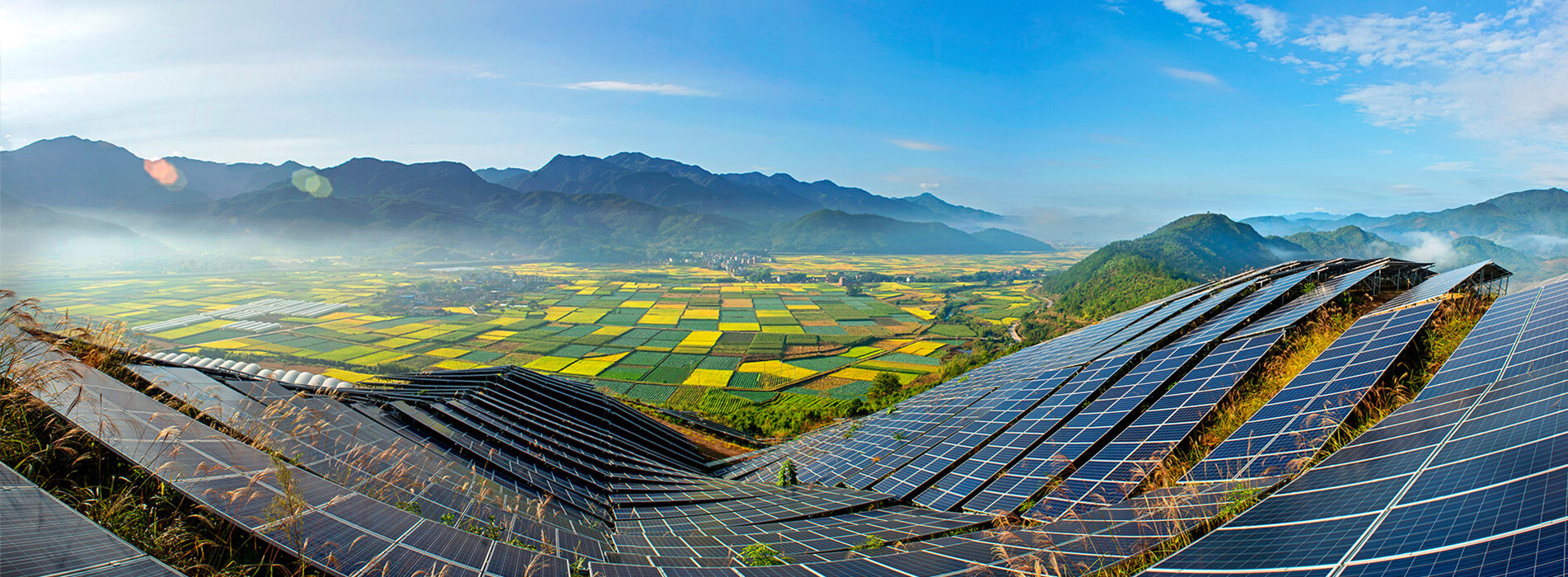
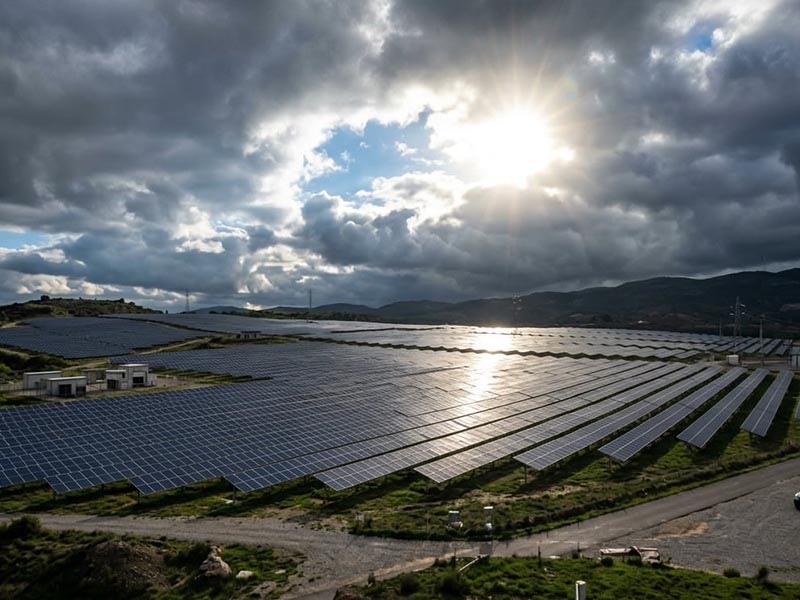
      With the global energy transition accelerating, solar photovoltaic energy has become one of the most reliable and accessible renewable solutions. It is no longer limited to large-scale power plants, but has deeply integrated into our daily lives, bringing sustainable, clean, and cost-effective power to residential scenarios, public facilities, outdoor activities, and modern buildings. 1. Residential Solar Power 🏠 Household rooftop solar systems (3–15kW grid-tied solutions) are widely adopted for family daily power supply, helping homeowners reduce electricity bills and achieve self-sufficient power consumption. For remote and off-grid areas such as plateaus, islands, pastoral zones, and border outposts, small standalone solar power systems provide stable electricity for lighting, televisions, and daily living equipment. Solar water pumps also effectively solve drinking water and farmland irrigation problems in power-free regions, improving local living conditions. 2. Outdoor & Portable Solar Applications ⛺️ Solar technology greatly enriches outdoor lifestyles and off-grid scenarios. Portable solar energy solutions include outdoor solar lighting, mobile solar energy storage systems, solar tents, inflatable photovoltaic mats, solar hiking gear, solar cookers, and solar RV power supply systems. These lightweight and eco-friendly solutions support convenient power access for camping, hiking, self-driving tours, and field operations. 3. BIPV Solar Building Integration 🏙 Building Integrated Photovoltaics (BIPV) redefines modern architectural design. Solar panels are perfectly combined with buildings to realize dual functions of decoration and power generation. Common BIPV applications include solar rooftops, photovoltaic windows, curtain walls, sunshade panels, exterior wall systems, and solar sunrooms. It enables zero-carbon buildings, saves building energy consumption, and creates aesthetic and eco-friendly architectural spaces. 4. Public & Urban Infrastructure ⛲️ Solar energy is widely applied in urban public facilities to promote low-carbon city construction. Typical scenarios cover solar EV charging stations & carports, solar bus shelters, smart solar public seats, landscape photovoltaic installations, solar street lights, solar water purification equipment, and solar advertising billboards. These public solar projects help cities reduce grid pressure, lower carbon emissions, and realize intelligent green urban management. Final Thought Continuous technological innovation and optimized solar energy storage technology are making photovoltaic power more efficient, stable, and adaptable. From family houses to urban infrastructure, from outdoor life to green buildings, solar energy is becoming an indispensable part of a sustainable future.    
  • Full Moon & Green Light | Mid-Autumn Festival Brand Copy for BIPV Solar Carport
    Full Moon & Green Light | Mid-Autumn Festival Brand Copy for BIPV Solar Carport Sep 24, 2026
    The Mid-Autumn Festival returns with a full moon hanging in the sky and our solar energy storage. Since ancient times, the full moon has stood as the most tender expectation in people’s hearts, symbolizing perfection, protection, companionship and endless hope. For thousands of years, people have entrusted their emotions to the bright moon, pursued reunion and prayed for peace, prosperity and well-being for all. In the booming era of new energy, we integrate the traditional romance of the Mid-Autumn Festival with the technological power of green energy, taking photovoltaic innovation as our inspiration and solar carports as our carrier. The gentle protection of moonlight and the sustainable companionship of clean photovoltaic power complement each other, composing a unique and inspiring chapter for the new energy industry.   🌕 Happy Mid‑Autumn Festival!    The beauty of Mid-Autumn Festival lies in reunion and harmony; the value of photovoltaic energy lies in long-term empowerment and sustainability. If the full moon is the most gentle gift the night sky offers to humanity, then BIPV solar carports are the green protective barrier that technology brings to modern cities, industrial parks, mining zones and global users. Traditionally, we look up at the bright moon and pray for blessings; in the new era, we devote ourselves to photovoltaic development and guard a greener future. Time moves in cycles, and dedication never fails progress; the energy industry evolves, and green power never lets down the times. From soft moonlight to clean photovoltaic electricity, from natural gifts to technological empowerment, our pursuit remains unchanged: a better life, an eco-friendly world, and long-term win-win cooperation. A solar carport is far more than a simple shelter for vehicles against wind and sun. It is a modern new energy infrastructure integrating sunshade protection, rainproof structure, power generation, energy storage and green empowerment.  Widely applied in industrial parks, commercial complexes, municipal parking lots and highway service stations, it also serves as a core supporting facility for overseas new energy projects, IPP solar power stations and optical-storage-charging integrated smart parks.    With exquisite aluminum alloy structures and high-performance transparent BIPV modules, it collects solar energy throughout the day and converts natural light into stable, clean electricity. It continuously empowers industrial production, facilitates daily life and boosts the development of low-carbon cities around the world. In scorching summer, solar carports effectively block high-temperature sunlight and protect vehicles and equipment from aging and damage. In rainy and stormy weather, their sturdy and durable structural design provides reliable shelter and creates a safe and stable parking environment.    Day and night, they quietly absorb solar radiation and convert it into clean power with zero pollution and zero emissions, practicing low-carbon development concepts with silent and persistent strength. Different from traditional single-functional buildings, BIPV solar carports perfectly integrate architectural aesthetics with energy production, balancing practicality and visual beauty. They have become an indispensable core carrier for new energy popularization, commercial energy saving and large-scale IPP photovoltaic project supporting construction.   The full moon rises periodically, yet the power of green light lasts forever. The Mid-Autumn Festival embodies the warmth of reunion year after year, while the photovoltaic industry embodies our original aspiration of long-term persistence. Amid the global energy transformation wave, we have been deeply engaged in BIPV solar carports, integrated photovoltaic systems and optical storage supporting equipment. We keep up with favorable new energy policies, large-scale national IPP power generation plans and foreign investment incentive policies in emerging markets including Bangladesh, Cambodia, Uzbekistan, Southeast Asia and Africa. With high-quality products, standardized technology and all-round supporting services, we assist global green energy construction and provide stable, efficient and durable new energy solutions for partners worldwide.   We deeply understand that every trust is precious, and every project carries the expectations of our partners. Just as the full moon never fails to fulfill people’s reunion wishes, we always adhere to quality-oriented development, technological innovation and win-win cooperation. Targeting complex regional environments including high-temperature tropical climates, salt spray coastal areas, snowy central Asia and dusty West Africa, we customize professional solar carport solutions. We optimize structural load design, anti-corrosion technology and power generation efficiency to fully adapt to local project conditions, meeting the construction needs of large-scale photovoltaic power station supporting facilities, industrial and commercial park operation, and public EV charging scenarios. We strive to make green photovoltaic power cross mountains and seas, take root globally and deliver sustainable energy empowerment.   Under the full moon, we walk hand in hand with green light; driven by clean energy, we march toward perfection. The Mid-Autumn Festival is not only a moment of reunion, but also a new starting point for accumulation and breakthrough. Looking back, we have cooperated with numerous global partners to launch thousands of solar carport projects, empowering the steady implementation of distributed photovoltaic projects, large-scale IPP power stations and optical-storage-charging integrated projects worldwide. Looking ahead, we will keep polishing our core products including BIPV solar carports and photovoltaic support systems. We will continue to explore global new energy markets, comply with national renewable energy development plans, and take full advantage of preferential policies such as duty-free equipment import, foreign investment encouragement and long-term PPA cooperation to provide more professional, systematic and practical supporting solutions for global clients.   The bright moon illuminates the way forward; endless green power fuels our journey. May the moon be full and life be perfect; may the world be peaceful and all beings thrive. On this precious Mid-Autumn Festival, we sincerely thank every global partner and client for your long-term trust, support and companionship. We are grateful for every encounter and every mutually beneficial cooperation that binds us together across distances.   The bright moon witnesses our original intention; photovoltaic light writes a brilliant new chapter. In the future, we will take light as our medium, quality as our foundation and win-win cooperation as our lifelong pursuit. We will continue to delve into the green new energy industry, allowing BIPV solar carports to guard more scenarios, empower more projects and brighten more futures. May we cooperate steadily for years to come, seize new opportunities in the global new energy industry, embark on a greener journey together, and embrace a brilliant and perfect future hand in hand.   Happy Mid-Autumn Festival | Full Moon, Brighter Green Future 🌙 Moon brings gentle light, solar brings lasting green power.  Under the glowing harvest moon, we keep pursuing clean solar power.   Grateful for our partnership. Looking forward to more successful solar, BIPV & carport projects together! Thanks to all our valued partners for your trust and support. May every renewable energy project shine with great success. Wish you and your family joy, health and prosperity!
  • Winter PV Power Drop: Don’t Blame Low Temperatures! Professional O&M Guide
    Winter PV Power Drop: Don’t Blame Low Temperatures! Professional O&M Guide Sep 24, 2026
    Every winter, many photovoltaic plants see a noticeable decline in power output. Faced with this drop, plant owners and new O&M staff often jump to the same conclusion: cold weather has damaged the modules. This is one of the most widespread misconceptions in the solar industry. For frontline O&M practitioners, it is critical to understand one core principle: PV modules perform better at low temperatures. Cold does not damage solar panels; it improves their conversion efficiency. Lower winter generation is not caused by broken equipment. It is a normal seasonal fluctuation driven by external environmental factors. Mastering this fundamental logic and correcting biased assumptions is the first step for new solar technicians to build professional competence. Below we break down the real causes of winter generation loss and share a full set of O&M practices from basic field work to advanced risk assessment, helping stabilize plant output, avoid operational pitfalls and maximize asset returns.   1. Debunk the Myth: Cold Helps, Not Hurts PV Generation Most people intuitively assume equipment works worse in cold weather, but solar modules operate in the opposite way. Power generation relies on the photovoltaic effect. Conversion efficiency is strongly temperature-dependent: the cooler the module, the higher its efficiency; high heat causes performance degradation. PV modules actually deliver better performance on cold winter days than during hot summer periods. The observed generation drop has nothing to do with frozen or defective panels. It is purely a seasonal environmental change, so there is no need for panic or false fault alarms. Three external factors account for winter power losses, and all are essential knowledge for O&M teams. • Reduced solar irradiance — the primary cause In winter, the sun sits at a lower altitude. Shorter daylight hours and weaker solar radiation directly cut the energy input for power generation. This is an unavoidable natural seasonal pattern. • Obstructed panel surface Winter rain, snow, fog and frost leave dust, snow and ice on module surfaces. These coverings block sunlight and reduce transmittance, dragging down power output. Partially blocked panels are especially risky. Uneven shading can trigger hotspot faults, which degrade modules permanently if left unaddressed. • Hidden equipment losses triggered by low temperatures Cold does not harm PV modules, yet it creates operational issues for balance-of-system components. Low temperatures may delay inverter startup and grid connection, shortening effective generation time. Thermal expansion and contraction can loosen cables and terminals, raising line losses. Cold may also crack or degrade cable insulation, creating safety hazards. These hidden issues do not always trigger alarms, but they continuously reduce yield and test the O&M team’s ability to inspect and predict risks. 2. Basic O&M Practice: Panel Maintenance for New Technicians Panel cleaning is a foundational skill for new solar O&M staff, and proper handling can effectively mitigate winter generation losses. Follow these rules for different surface conditions: Light frost and thin snow: Let them melt naturally. Manual cleaning is unnecessary and may damage modules. Heavy snow: Clear gently with dedicated soft tools. Never scrape with hard objects or use water sprays in freezing conditions, which can crack glass and ruin coatings. Focus on removing uneven snow cover to prevent hotspots. Dust buildup: Clean at noon when temperatures rise above freezing. This protects equipment while restoring light transmission and power output. 3. Mid-level Competency: Refined Inspection & Active Irradiance Optimization The difference between junior technicians and senior O&M specialists is simple: juniors fix faults reactively; seniors proactively eliminate risks and optimize light harvesting. • Regular detailed equipment inspection in winter Monitor inverter performance under low temperatures and clear alarms promptly to maintain stable grid-tied operation. Retighten loose terminals and check cable insulation for cracks and aging to reduce line losses and safety risks. • Optimize light access Trim overhanging branches and remove debris around arrays to eliminate shading. For adjustable mounting brackets, adjust tilt angles to match winter solar altitude. This maximizes the irradiated area and boosts energy yield. 4. Advanced Expertise: Data Monitoring & Latent Fault Diagnosis The core advantage of senior O&M engineers lies in data-driven judgement. Seasonal generation decline can mask hidden faults on individual strings or panels. Abnormalities are often dismissed as “normal winter losses”, leading to continuous revenue loss. Skilled specialists compare plant performance against peer sites in the same region to distinguish natural seasonal reduction from equipment anomalies. Using string current monitoring and infrared thermography, they detect invisible defects including microcracks, poor connector contact and hotspots at an early stage.  
  • On-site Video of Cuba PV Project | Ground PV Mounting Solution Specially for Coastal High Humidity & High Temperature Environment Aug 04, 2026
    Core Advantages of Ground PV Mounting System Tailored for Cuban Projects 1.Dual Anti-corrosion Materials, 25-Year Service Life Guarantee for Coastal Areas   Two material options for main mounting structures available for overseas projects: 6005-T5 Aluminum Alloy Mounts: Lightweight, rated C5-M highest anti-corrosion grade, resistant to Caribbean salt spray corrosion, zero rust removal and maintenance in later operation; Q355B Hot-dip Galvanized Steel Mounts: High load-bearing capacity with cost advantages, extra-thick galvanized layers, suitable for heavy-duty pile foundations on clay and hard ground. All bolts and accessories are made of 304 stainless steel to avoid jamming caused by coastal rust, fully complying with PV engineering standards for Latin American coastal regions.   2.Adjustable Tilt Design to Maximize Power Generation in Tropical Regions   Based on solar irradiance data at Cuba’s northern latitude, the mounts support flexible tilt adjustment ranging from 10° to 35°, matching the local solar altitude all year round. Annual power output can be increased by over 10% compared with fixed mounts.   The structure is verified via finite element mechanical simulation to withstand extreme monsoon wind pressure in Cuba, ensuring stable solar arrays free of shaking in long-term operation.   3.One-stop Full-chain Supporting Services for Overseas Projects   We deliver more than finished PV mounts, offering all-round delivery support for projects in Cuba and other Latin American countries: Free pre-project site survey, structural stress calculation for mounts and customized drawing output; Complete international certification documents including CE and ISO to meet acceptance standards of Cuban power stations; Modular packaging to optimize container loading volume and cut ocean freight costs. Nowadays, Caribbean nations including Cuba, the Dominican Republic, Haiti and Mexico are continuously opening up investment in photovoltaic infrastructure, with numerous 5–50 MW ground-mounted solar power plants under planning and construction.     Our ground PV mounting system has formed mature standardized solutions for coastal projects, covering: Simple ground mounts for small off-grid PV farms and village power supply; Fixed PV mounts for medium-sized industrial and commercial parks; Complete ground mount arrays for large megawatt-level solar power stations. Material, pile foundation and tilt angle schemes can be flexibly customized according to customers’ site terrain, climate conditions and budget.  
  • Shipment Update: Solar Rails & PV Accessories Shipped to Philippines! Aug 04, 2026
    Why Our R Rails Stand Out for Philippine Tropical Coastal Climate? Typhoon & Wind Resistant Structure Made of high-strength AL6005-T5 aluminum alloy, our R rail structure withstands strong typhoon winds up to 60m/s, perfectly matching the extreme weather condition in the Philippines, no panel falling or rack deformation risk. Anti-Corrosion for Salt Spray Coast Areas 12-15μm thick anodized surface effectively blocks humidity, sea salt mist and tropical UV radiation, 25+ years service life without rust, no frequent maintenance needed for seaside solar projects. Fast & Labor-Saving Installation Standard slot design fits all mainstream solar panels; complete matched accessories reduce onsite cutting and drilling, cutting installation labor cost for Philippine construction teams. Certified & Bulk Stable Supply All products pass CE & TUV certification, comply with local Philippine solar construction standards. We own automated production lines with gigawatt monthly output, support mixed bulk orders, OEM/ODM customized rail sizes and fast on-time shipment. Every batch undergoes dimension, material and load test before delivery, to guarantee consistent quality for our Philippine partners.   The Philippines government encourages renewable energy via net metering policy, high local electricity cost pushes massive solar installation demand. We keep steady monthly shipments to Manila, Cebu and Davao, supporting local solar businessmen with competitive factory direct price, flexible payment terms and complete shipment documents.
1 2

A total of 2 pages

Get Started With ROI Technology

  • Hotline +8615859279267

  • E-mail info@xmroi.com

  • Address No.1504, Building B08, Phase lll, Software Park, BRlCS Future Innovation Park, Chengyi North Street, Jimei District, Xiamen, China.

Request a Quote

leave a message

leave a message
For any request of information or technical support, fill in the form. All fields marked with an asterisk* are required.
Submit
Contact us :
+8615859279267

Home

Products

WhatsApp

contact